


The El Reno tornado remains one of the most remarkable storms in American weather history. This powerful 2013 Oklahoma tornado formed near El Reno, Oklahoma on May 31, 2013, during a dangerous severe weather outbreak.
What made the El Reno tornado extraordinary was its immense size and unpredictable movement across open plains. Scientists later confirmed it as the widest tornado ever recorded, stretching nearly 2.6 miles at its largest point. The storm produced devastating tornado destruction and revealed unusual patterns in tornado development. Because of its scale and complexity, the event became a major case study for storm science research, helping experts understand extreme tornado behavior and improve forecasting systems across the United States.
Overview of the 2013 El Reno Tornado
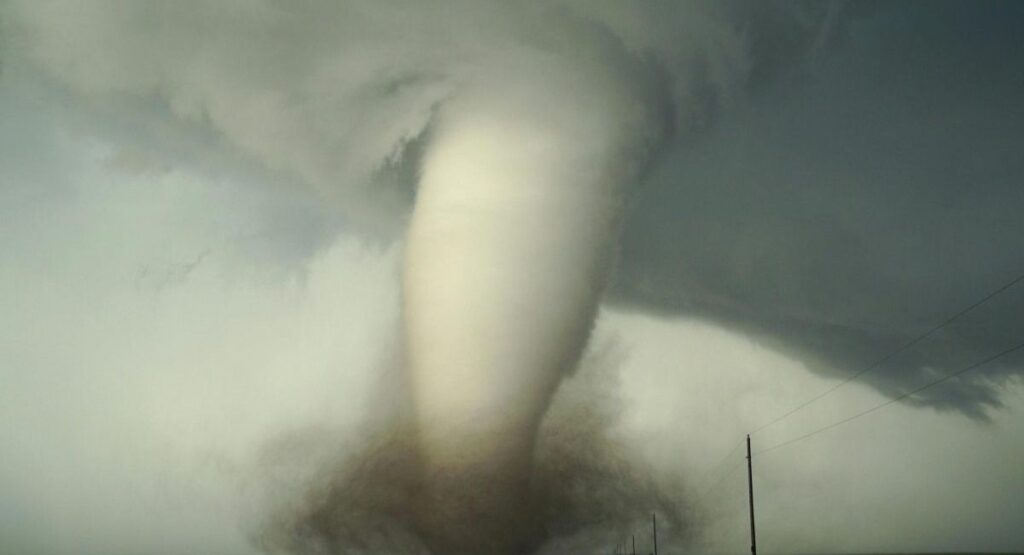
The El Reno tornado formed during a major severe weather outbreak across central Oklahoma. The storm began as a rotating supercell and soon evolved into a massive central Oklahoma tornado. This dramatic deadly tornado event occurred near El Reno, Oklahoma, where rapidly rotating winds created a dangerous storm system. Scientists from the National Weather Service quickly began monitoring the storm as it intensified.
The 2013 Oklahoma tornado became famous because of its enormous size and chaotic structure. Researchers later confirmed that the storm produced severe tornado destruction across rural areas. Despite limited population density, the tornado disaster impact still caused significant damage to farms and roads. This historic event pushed meteorologists and scientists to rethink how extreme tornadoes behave.
Meteorological Conditions Behind the El Reno Tornado
The weather conditions that created the El Reno tornado were extremely volatile. A strong powerful low-pressure system moved across the Great Plains while warm air from the Gulf of Mexico surged northward. This combination created powerful atmospheric instability and strong horizontal wind shear in the atmosphere. Scientists at the NOAA Storm Prediction Center warned that these conditions could produce dangerous supercell storms.
As the storm developed, rising warm air collided with cooler air masses above. This interaction increased storm rotation and produced a powerful mesocyclone. The combination of intense rotation and strong rear-flank downdraft helped create one of the most powerful tornado systems ever observed. This environment allowed the El Reno tornado to grow rapidly in size and tornado intensity.
How the Tornado Formed (Storm Initiation)
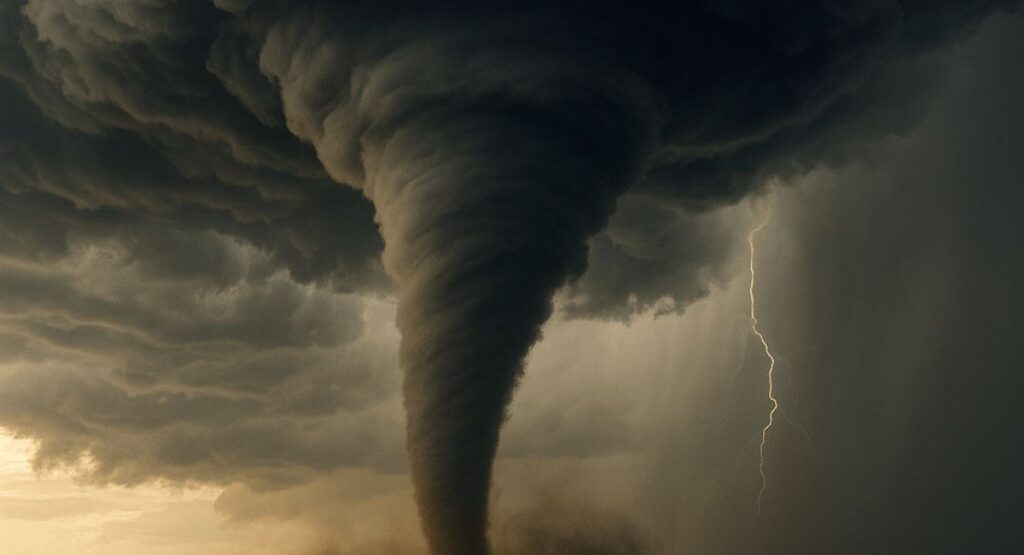
The El Reno tornado formed during the late afternoon as towering storm clouds expanded across western Oklahoma. Radar images from the National Weather Service showed rapid storm development within minutes. Soon the rotating storm produced a violent funnel cloud that touched down west of El Reno, Oklahoma. This marked the beginning of one of the most unusual tornadoes ever recorded.
As the storm strengthened, the tornado widened dramatically. Strong inflow winds and powerful updrafts fueled the rotating system. The growing vortex soon developed into a massive multiple vortex tornado. These rotating cores produced sudden bursts of extreme wind speeds, making the storm extremely dangerous for residents and storm observers.
Early Storm Development and Rapid Intensification
During the first stages, the El Reno tornado expanded quickly as radar systems detected intense rotation inside the storm. Researchers later used mobile Doppler radar to study how the storm grew so rapidly. The powerful circulation demonstrated rare tornado behavior that challenged existing weather prediction models used by scientists and meteorologists.
Timeline of the Tornado’s Path and Development
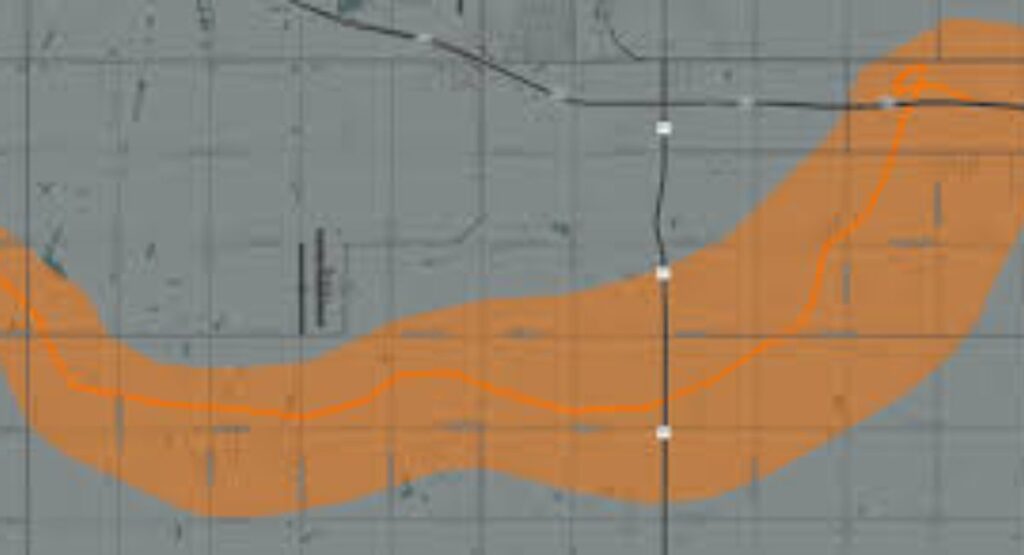
The El Reno tornado began its journey west of El Reno, Oklahoma and soon traveled across open farmland. Its destructive storm path stretched across Canadian County and nearby areas. During this time the tornado grew wider and stronger while emergency warnings were issued through regional tornado warning systems.
As the storm continued moving, the vortex expanded dramatically before slowly weakening. Radar data showed that the tornado’s movement changed direction multiple times. This unpredictable motion confused many storm chasing teams and scientists studying the storm in real time.
The Record-Breaking Width of the El Reno Tornado
The most famous feature of the El Reno tornado was its extraordinary size. At its largest point the storm measured nearly 2.6 miles wide. This enormous measurement officially made it the widest tornado ever recorded in modern weather history. The size alone turned the storm into a historic record-breaking tornado event.
The storm’s massive circulation created devastating winds across open land. Scientists studying tornado intensity discovered that wide tornadoes can behave very differently from smaller storms. The El Reno tornado demonstrated how horizontal airflow and storm structure influence tornado size.
Record Tornado Measurements
| Tornado Feature | Measurement |
| Maximum Width | 2.6 miles |
| Estimated Peak Winds | Over 300 mph |
| Duration | About 40 minutes |
| Location | El Reno, Oklahoma |
Satellite Tornadoes and Unusual Storm Behavior
The El Reno tornado displayed a rare and dangerous structure. Smaller funnels rotated around the main vortex. These secondary funnels formed what scientists call a multiple vortex tornado. Each smaller vortex created bursts of extreme wind capable of producing sudden catastrophic storm damage.
Scientists later discovered that the storm also produced satellite tornadoes. These small funnels moved independently around the main circulation. Such behavior increased the storm’s destructive potential and revealed new details about complex tornado behavior rarely seen in other tornado events.
Impact, Damage, and Fatalities
Although the El Reno tornado traveled mostly through rural land, the tornado destruction still caused severe losses. Farms, roads, and buildings suffered serious rural infrastructure damage. Several vehicles were thrown long distances due to intense winds generated by the storm.
Emergency agencies responded quickly once the storm weakened. Teams from the Oklahoma City Fire Department and the National Guard worked with local authorities to secure affected areas. Their efforts helped manage the broader tornado disaster impact and support recovery operations.
Tornado Damage Overview
| Category | Details |
| Property Damage | Millions of dollars |
| Infrastructure | Roads, farms, power lines |
| Emergency Response | Oklahoma City Fire Department, National Guard |
| Storm Type | 2013 Oklahoma tornado |
Scientific Discoveries and Advances After the Tornado
The El Reno tornado produced an enormous amount of research data. Scientists from the University of Oklahoma and NOAA Storm Prediction Center studied radar recordings and storm observations. This research greatly advanced severe weather research and improved understanding of tornado structure.
These findings also helped improve storm forecasting technology. Researchers discovered how strong wind patterns and atmospheric instability influence tornado growth. These lessons continue guiding tornado forecasting improvements used by modern tornado warning systems.
Controversies and Rating Debate
One major debate about the El Reno tornado involved its official rating. According to the Enhanced Fujita Scale, the National Weather Service rated the storm as an EF3 because damage indicators were limited in rural areas. However radar data suggested extremely powerful winds.
Some experts believe the storm may have reached EF5 tornado intensity. Researchers studying radar records observed extreme wind speeds far above typical EF3 storms. This debate continues today within the meteorology community.
Legacy of the El Reno Tornado and Lessons Learned
The El Reno tornado changed how scientists study extreme storms. Researchers gained valuable insights into tornado damage assessment, storm structure, and unpredictable tornado movement. These discoveries continue influencing modern storm science research across the United States.
Today the El Reno tornado stands as a powerful reminder of nature’s force. Communities across Tornado Alley now rely on improved storm forecasting technology and advanced warning systems. Because of this historic storm, researchers and meteorologists now understand more about the dangers of large tornadoes and how to protect lives.
FAQs
Was the El Reno tornado an EF5?
The El Reno tornado from May 31, 2013 was officially rated EF3 on the Enhanced Fujita Scale by the National Weather Service. However, radar data from mobile Doppler radar recorded wind speeds over 295 mph. Some meteorologists argue that these winds suggest EF5 tornado strength. The lower rating happened because the storm traveled mostly over rural land with limited structures for tornado damage assessment.
What tornado was worse, El Reno or Joplin?
Both storms were devastating but in different ways. The 2011 Joplin tornado caused far greater loss of life and destruction because it struck a densely populated city. It killed 158 people and destroyed thousands of buildings. The El Reno tornado, while the widest tornado ever recorded, caused fewer fatalities because its path mostly crossed open countryside.
Why is the El Reno tornado so famous?
The El Reno tornado became famous because of its extraordinary size and unusual behavior. It reached a width of about 2.6 miles, making it the widest tornado ever recorded. Scientists also studied its complex multiple vortex tornado structure and unpredictable path. The storm provided valuable data for severe weather research and improved tornado forecasting improvements.
Why did Twisters choose El Reno?
The filmmakers behind the movie Twisters (2024) used the El Reno tornado as inspiration because it represents one of the most unusual storms ever studied. Its massive size, rapid growth, and chaotic movement created a dramatic real-world example of extreme tornado behavior and the dangers faced during storm chasing.
What is the #1 deadliest tornado in US history?
The deadliest tornado in United States history is the Tri-State Tornado of 1925. This catastrophic storm traveled through Missouri, Illinois, and Indiana, killing 695 people. It remains the worst tornado disaster impact ever recorded in the country and is still studied by meteorologists and researchers in storm science research today.

Hi, I’m Zain Bhatti, founder of CelebPulse.I create SEO-optimized celebrity content focused on age, net worth, awards, and lifestyle insights. My goal is to provide accurate, easy-to-understand information while building a trusted entertainment resource online.